Project period: 2025-2028
Presentation
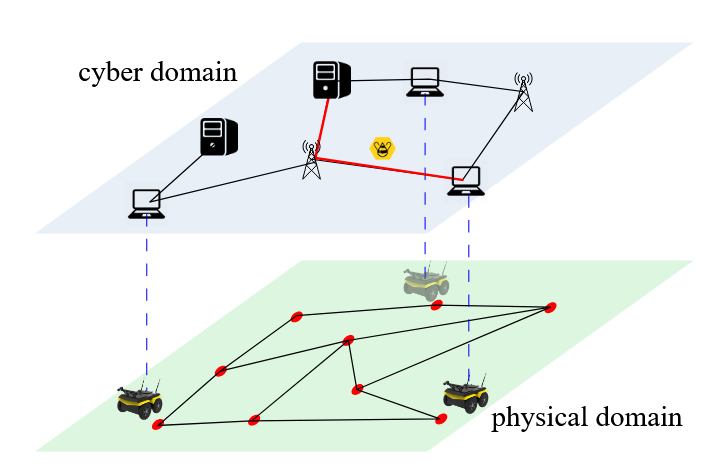
Cyber deception uses misleading information, decoys, and honeypots to shape an attacker’s beliefs and actions. In a multi-domain cyber-physical system, however, cyber and physical components are connected and a security decision in one domain can affect the other. Designing deception strategies independently can therefore leave inconsistencies that attackers may exploit.
GAML-MUDIT studies a coordinated deception framework for Internet of Things and cyber-physical environments, including critical infrastructures such as water treatment systems. Game-theoretic models represent the interaction between defenders and adversaries, while deep reinforcement learning supports the prediction of attacker behavior and the adaptation of defensive actions. Intent-based networking is also considered for orchestrating deception automatically. The project aims to create believable, persistent cyber and physical decoys that can adapt in real time without affecting genuine systems.
Partners
- David Jaurès FOTSA MBOGNE, University of Ngaoundere, Cameroun
- Bertrand TCHANTCHO, Université de Yaoundé 1, Cameroun
- Charles Kamhoua, US DEVCOM Army Research Laboratory
Results
- A multi-domain deception framework coordinating network and physical scenarios.
- Consistent and credible decoys designed to remain effective over time.
- Deep reinforcement learning for adaptive deception and attacker-behavior prediction.
Project page: GAML-MUDIT